

Why sleep
Longevity starts at night.
There is a lot of talk about longevity: nutrition, exercise, supplements. The lever that waits every night often gets overlooked. That's exactly where we start.
01 · What happens at night
The night is not a break.
While you sleep, your body keeps working. Researchers observed, for example, that in the brains of mice the space between cells widens markedly during sleep and metabolic waste is cleared faster.
02 · When it's too little
Short sleep comes at a price.
The American sleep medicine societies recommend that adults regularly sleep at least seven hours.1 According to their consensus statement, people who persistently sleep less are more often affected by:
- Weight gain and obesity
- Diabetes and high blood pressure
- Heart disease and stroke
- Depression
03 · Why for women
Women sleep differently.
Insomnia affects women more often than men. A meta-analysis with over 1.2 million participants found a roughly 1.4 times higher risk, and the gap grows with age.3
Then there's everyday life: work, family, a mind that won't switch off at night. That's exactly who we make our routine for.
04 · Germany
Germany sleeps badly.
According to the DAK health report, sleep disorders among working people aged 35 to 65 rose by 66 percent since 2010. Almost one in ten employees shows symptoms of insomnia.5
05 · What we make of it
Tools instead of active ingredients.
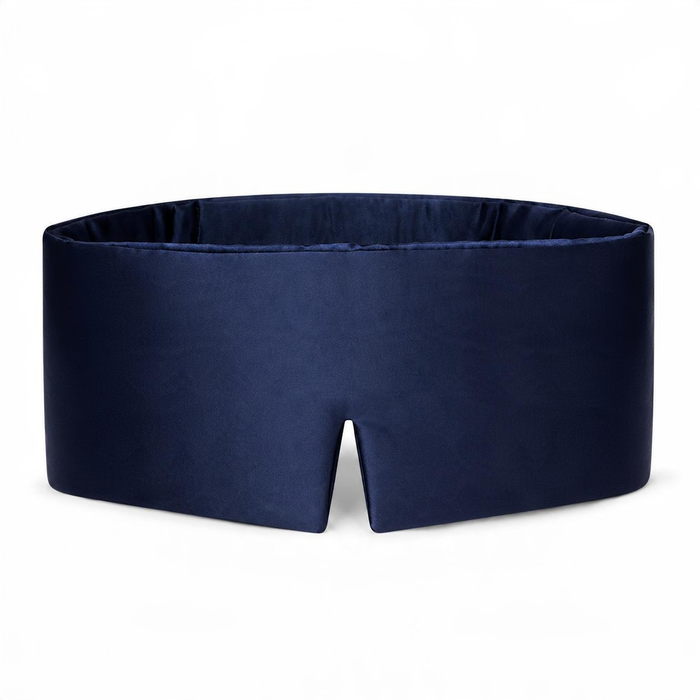
Dark
The satin sleep mask, softly padded, for evenings that don't get completely dark.
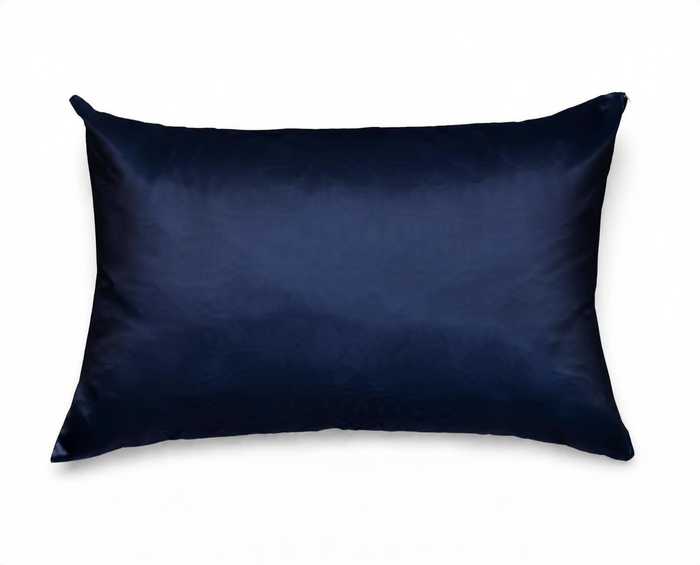
Smooth
The satin pillowcase. Satin glides instead of rubbing, on cheeks and hair.
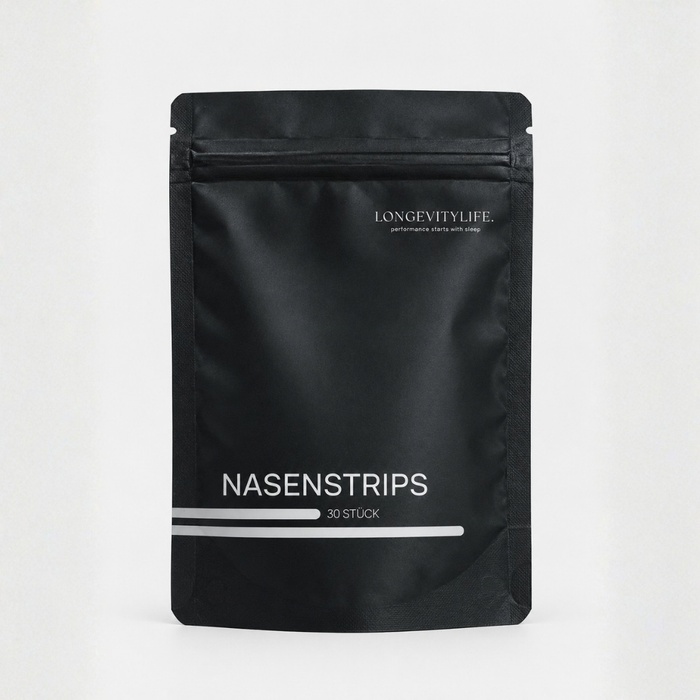
No active ingredients
The satin nasal strips, purely mechanical and without any active ingredients.
No one can promise you good sleep, not even us. What we can do: make the evening it starts with easier. With three steps in one colour world.
Sources
- Watson NF et al. Recommended Amount of Sleep for a Healthy Adult: A Joint Consensus Statement of the American Academy of Sleep Medicine and Sleep Research Society. Journal of Clinical Sleep Medicine 2015;11(6):591-592.
- Cappuccio FP et al. Sleep Duration and All-Cause Mortality: A Systematic Review and Meta-Analysis of Prospective Studies. Sleep 2010;33(5):585-592.
- Zhang B, Wing YK. Sex Differences in Insomnia: A Meta-Analysis. Sleep 2006;29(1):85-93.
- Xie L et al. Sleep Drives Metabolite Clearance from the Adult Brain. Science 2013;342(6156):373-377.
- DAK-Gesundheit. Health Report 2017: Germany is sleeping poorly.
These figures describe associations from studies on sleep in general. They make no statement about the effect of our products and do not replace medical advice. If sleep problems persist, please talk to your doctor.